
Different types
 00:07:19
**The Role and Purpose of Systematic Theology**
Systematic Theology stands as the bedrock of religious comprehension and faith. It offers believers a structured approach to grappling with bigger questions, ultimately fortifying their spiritual foundations. In this lesson, we will delve into the significant role and purpose that Systematic Theology plays in shaping our understanding of faith.
In this lesson we'll explore
the significant role
purpose of Systematic Theology.
By the end of this lesson you will
know how to clearly define systematic theology
the role it plays in 4 parts
and the 4 part purpose of systematic theology.
*Scripture for Reflection (Proverbs 2:6):*
"For the Lord gives wisdom; from his mouth come knowledge and understanding."
Use this scripture to keep fresh in our mind as we go throughout this lesson.
Lets start by **Defining Systematic Theology:**
It is a methodical approach to comprehend and organize religious beliefs. The term "systematic" implies a deliberate effort to construct a coherent framework for understanding religious doctrines and their interrelationships.
A simply way to think of this is a structured approach to the Study of God and Religion (we will be repeating this throughout the course)
 00:01:25
 00:04:11
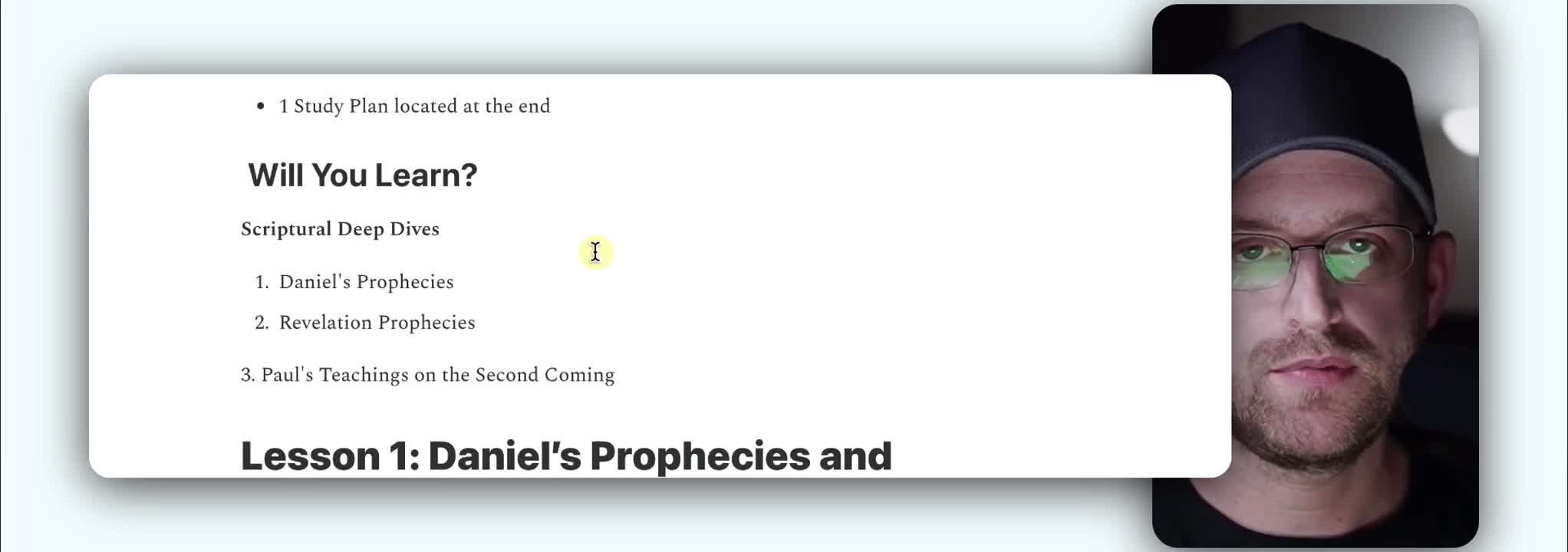
The concept of the Second Coming and End Times holds significant theological importance in Christianity. This belief centers around the return of Jesus Christ to Earth and the culmination of God's plan for humanity. While the specifics and interpretations may vary among different Christian denominations, there are key biblical references and teachings that provide insight into this topic.
The Second Coming of Jesus Christ
The Bible affirms that Jesus will return to Earth in a glorious and triumphant manner. His second coming is described as an event with worldwide impact, signaling the completion of God's redemptive plan. Several passages highlight this significant event:
Matthew 24:30: "Then will appear in heaven the sign of the Son of Man, and then all the tribes of the earth will mourn, and they will see the Son of Man coming on the clouds of heaven with power and great glory."
Acts 1:11: "...This Jesus, who was taken up from you into heaven, will come in the same way as you saw him go into heaven."
Revelation 1:7: "Behold, he is coming with the clouds, and every eye will see him, even those who pierced him, and all tribes of the earth will wail on account of him. Even so. Amen."
Show Transcripts